
 blog
blog

Jun 26 • 5 min read
How to build an MLB DFS cash lineup on Wanna: start with the pitcher
MLB cash games live or die on your starting pitcher. Here's how to pick the right one — and right now, the right one is obvious. MLB is running full daily slates right now, and the search traffic for MLB DFS picks is real and rising. Wanna has the field mostly to itself on MLB content. This post is for players who want to build smarter cash lineups, starting today.Why your SP slot is the most important decision you make
In cash games — 50/50s and double-ups — you need to cash, not win. That means building a lineup with a high floor, not swinging for the fences. Starting pitchers give you the clearest floor in MLB DFS. A stud SP with a clean matchup can realistically earn 35-45 DFS points through innings, strikeouts, and a win. Hitters are dependent on four or five plate appearances going exactly right. Pitchers manufacture points more consistently, start to finish. The catch is variance. A mediocre SP who gets knocked out in the third inning tanks your whole lineup. So the question isn't just "who starts today?" It's "who gives me a floor I can build around?"What makes an SP worth anchoring your lineup around
Three things matter most for cash game SP selection: Strikeout rate. Each strikeout is a DFS point. A pitcher with a 35%+ K-rate is going to accumulate Ks at a different rate than a contact-heavy finesse guy. K-rate also predicts performance better than ERA alone — it's harder to sustain a low ERA without missing bats, and it's harder to suddenly miss bats without having done it before. Expected ERA metrics (xERA, xFIP, SIERA). ERA can run hot or cold over short stretches. xERA, xFIP, and SIERA adjust for what the pitcher actually controlled: contact quality, walk rate, home run suppression. When all three agree with the actual ERA, you have a real performer, not a luck-backed one. Matchup. A dominant pitcher against a low-wOBA lineup in a pitcher-friendly park is a cash game gift. A dominant pitcher facing a hot offense on a wind-out night is a risk. Check both.Jacob Misiorowski is the anchor right now
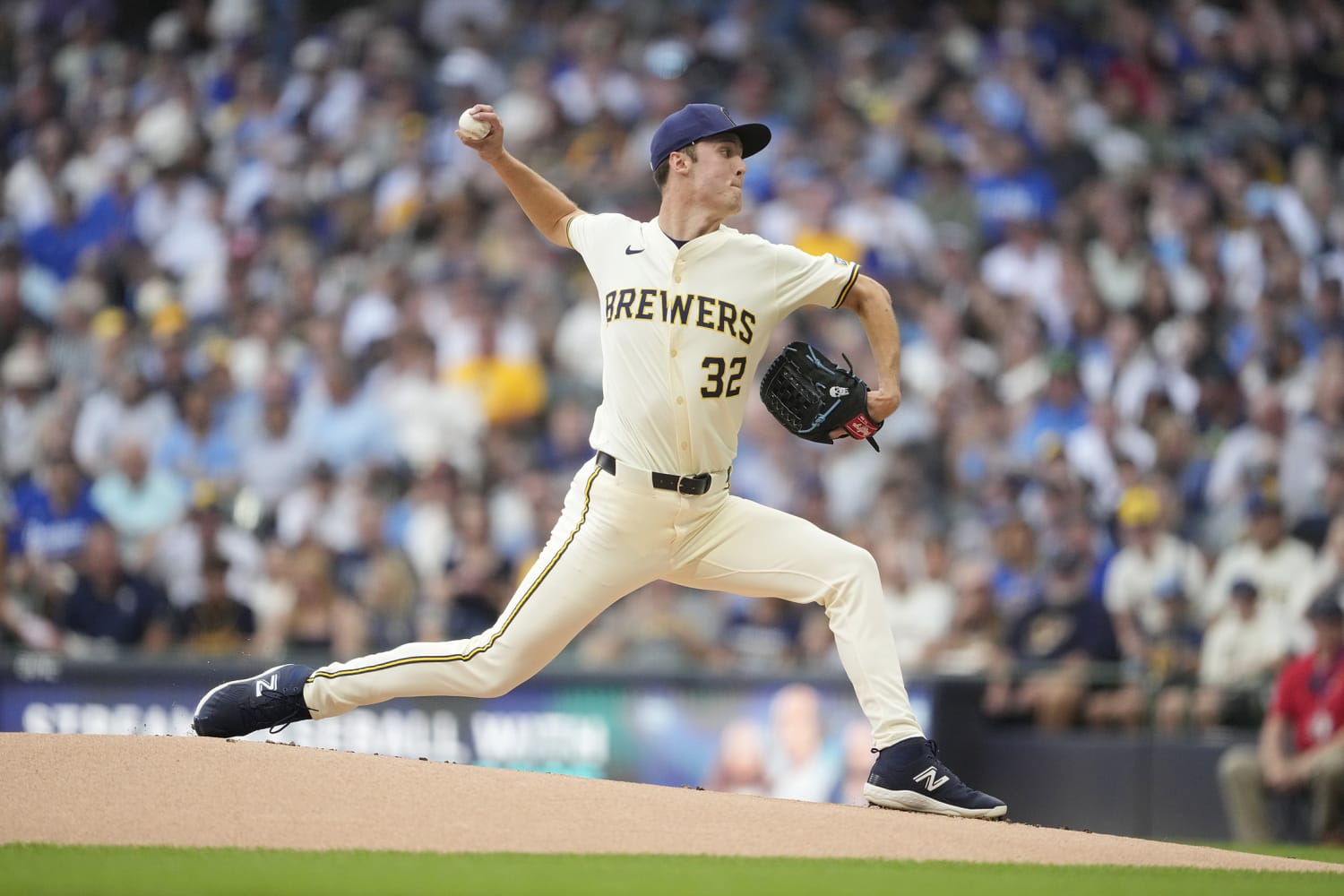
Milwaukee Brewers right-hander Jacob Misiorowski is the clearest SP play on any slate he pitches this month. The numbers are not close. Through 13 starts in 2026, Misiorowski leads all MLB starters in ERA (1.50), xERA (2.23), xFIP (2.21), and WHIP (0.81). His strikeout rate is 38.4%, which is historic territory for a starting pitcher. Opponents are hitting .151 against him. His K:BB ratio is 5.68, first in the league. On June 12 against Philadelphia, he threw a complete-game shutout with 15 strikeouts on 95 pitches. The Brewers gave him an extra day of rest afterward — his next start is scheduled for June 19 against Atlanta. That's the most important detail for lineup builders: check whether Misiorowski is on the slate before you do anything else. If he's pitching, he belongs in your cash lineup. A word on what "illustrative" means here: these are the numbers as of today. Actual DFS scoring depends on game-day events — weather, lineup cards, how many innings he pitches. The point isn't to promise an outcome; it's to show you how to think about the decision.When Sasaki or Ohtani makes sense instead
On days Misiorowski isn't pitching, two other names belong on your shortlist. Shohei Ohtani is posting a 0.74 ERA through 10 starts in 2026, which is historically unprecedented territory. He's also batting near the top of LA's lineup on pitching days, which means his DFS ceiling is unique — you're getting two-way production from one slot on days he both pitches and hits. The Dodgers are managing his workload carefully with extra rest between starts, so confirm his schedule before building around him. Roki Sasaki is the third name in the Dodgers rotation to watch. He's had a more uneven 2026 (4.53 ERA as of early June) compared to his promising 2025 stretch starts, but on days when his stuff is right and the matchup is favorable, he still carries a high K-upside. Treat him as a conditional play: look at the opposing lineup first.How to fill the rest of your lineup around your SP
Once you've locked your SP, the cash game logic flips. The rest of your lineup should go conservative. A few principles that hold up: Stack two or three hitters against a soft starter. Find the weakest arm on the day's slate and put two or three bats from that opposing lineup in your entry. You're not looking for a six-man stack like in GPPs. Two correlated hitters is enough variance reduction for cash. Target high-contact hitters, not just power hitters. In cash, plate appearances and reaching base matter more than home run upside. Look for hitters with .300+ average and low strikeout rates. Fill catcher and utility with reliable salary-efficient options. Don't stretch your budget across both premium hitters and a premium SP. If you're paying up for Misiorowski (and you should be), find your value plays in the middle of the order.A concrete example: building around Misiorowski on June 19
When Misiorowski starts against Atlanta on June 19, here's how I'd think about the build on Wanna: Lock Misiorowski as your SP. Then look at Atlanta's starter for that game — if the Braves are running out a mid-rotation arm, target two or three Brewers bats to stack lightly with your SP (SP stacks carry risk, so keep it to one or two hitters, not a full stack). For the rest of the lineup, scan the full slate for one plus matchup at 1B or 3B against a weak arm, a high-floor catcher under salary cap pressure, and an outfield spot where you can get a reliable hitter without overpaying. The lineup doesn't need to be clever. It needs to not have any zeros in it.What to do next time you're building on Wanna
The process is repeatable:- Check who's pitching. If Misiorowski, Ohtani, or another elite arm is on the slate, start there.
- Verify the matchup. Opposing lineup, park, weather.
- Lock your SP. Build backwards from salary.
- Find one soft-starter stack with two hitters.
- Fill the rest with floor — not ceiling.